Pull up Ballast Point real estate on a handful of sites this year and you will collect wildly different answers to what should be one question, depending on which source and which month you land on. One home-value tracker puts the neighborhood at $565,765, down 5 percent over the trailing year. Another site's own neighborhood page reports a median sale price of $476,000 for February 2026, down 36.3 percent year over year, then in a separate box on the same page lists a more recent average house price of $431,000, down 51.3 percent. A flat-fee listing estimator's spring 2026 update put the median at $499,000. Two brokerage market updates from January 2026, pulling from the same MLS, both land near $635,000. A trailing twelve-month calculation on a national portal shows $634,000. An August 2026 lifestyle blog ranking affordable Tampa neighborhoods cites $407,620. An MLS activity report covering the year ending April 2026 puts the average selling price at $741,883.
None of these sources made an error. Ballast Point's median is genuinely this unstable, and the instability itself is the more useful fact for anyone comparing it to Hyde Park, Bayshore Beautiful, or any other South Tampa neighborhood on a spreadsheet.
A Small Market With an Enormous Range
Redfin's neighborhood page recorded 29 home sales in Ballast Point in February 2026. That is not a typo. It is the entire monthly transaction volume for a neighborhood that, according to one MLS activity summary covering the year ending April 2026, saw 124 homes change hands total, an average of roughly ten per month.
Ten to thirty sales is not enough volume to produce a stable median in a neighborhood where prices span this wide a range. One search platform lists Ballast Point homes for sale between $90,000 and $10,900,000, from a 644-square-foot starter to a 10,019-square-foot estate with 5,837 square feet under air. Within that spread sits everything from 1940s and 1950s bungalows on inland streets to custom new construction going up near Bayshore Boulevard, to a subdivision called Crescent Place where the average sale price runs $1,724,500.
When your entire dataset for the month is two dozen sales and the price range those sales are drawn from spans seven figures, one closing on a bayfront estate or one distressed lot sold for land value can swing the reported median by tens of thousands of dollars. That is not a flaw in any single source. It is what happens when you calculate a median from a small, high-variance pool and then report it as if it were a stable citywide statistic.
The Same Number Means Different Things
Part of the disagreement traces to methodology, not error. A "median home value" from an automated valuation model estimates what every home in the neighborhood is worth right now, whether or not it sold. A "median sale price" only counts homes that actually closed in a given window, which is why it moves so much with volume this thin. A trailing twelve-month median smooths across a full year of closings and produces a steadier number, which is likely why the two brokerage market updates and the national portal's twelve-month calculation all converge near $634,000 to $635,000 even as single-month figures swing by $150,000 or more in either direction. An active-listing snapshot, meanwhile, measures what sellers are currently asking, not what buyers are currently paying. One local search site's snapshot from early May 2026 showed 24 active listings with a median list price of $1,312,000, a figure driven almost entirely by which sellers happened to be testing the market that week, not by what anything nearby had actually sold for.
Put those four measurements next to each other and the "true" median isn't hiding somewhere in the middle. Each number is answering a slightly different question, and in a market this thin, the answers don't have to agree.
What Actually Moves the Price
If the neighborhood-wide median is this noisy, the more reliable signal is location within Ballast Point, and specifically distance to Bayshore Boulevard. Multiple sources converge on the same rough tiering. Homes under roughly $500,000 tend to be older bungalows and smaller inland single-family properties, often needing updates. The $500,000 to $900,000 band holds renovated cottages, larger updated bungalows, and newer townhomes or recent infill construction. Above $1 million sits waterfront property, homes near Bayshore, and larger custom builds on premium lots, with true bayfront estates moving well into multimillion-dollar territory, consistent with Crescent Place's $1.72 million average.
That tiering also explains why price per square foot estimates vary almost as much as the median does. One brokerage's January 2026 figure put it at $352 per square foot. A search platform's active-listing average from May 2026 showed $574.06. An MLS activity report covering the year ending April 2026 landed at $282. None of these is wrong. They're measuring different slices of the same wide range, and a buyer comparing Ballast Point to a neighborhood with tighter, more uniform inventory needs to know that the per-square-foot number moves with proximity to the water almost as much as the median does.
How Ballast Point Stacks Up Against Its Neighbors
For buyers cross-shopping South Tampa, Ballast Point's positioning is more legible than its median suggests. It sits at the southern end of the Bayshore Boulevard corridor, bounded by Hillsborough Bay to the east and MacDill Air Force Base to the south, a short drive from downtown Tampa. Immediately north along the same stretch of Bayshore sits Bayshore Beautiful, where stately 1920s and 1940s homes carry a materially higher median near $1.3 million. Further north still is Hyde Park, denser and more walkable, anchored by Hyde Park Village's shopping and dining.
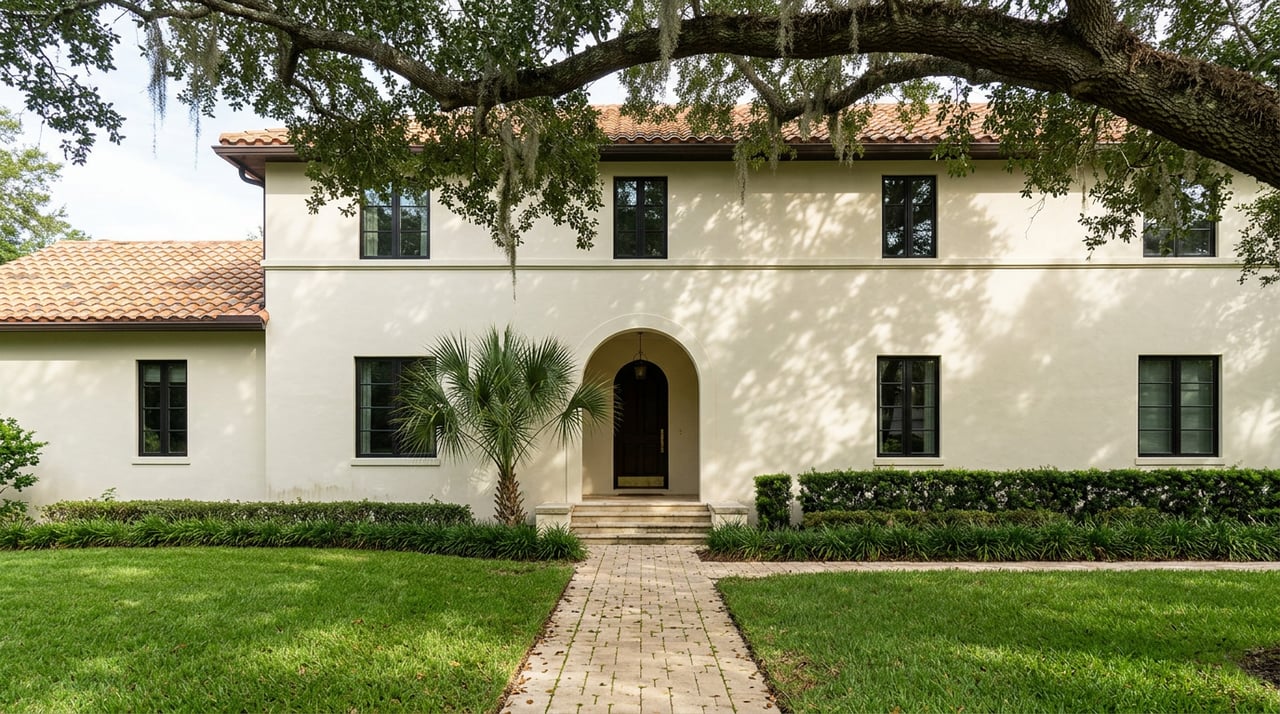
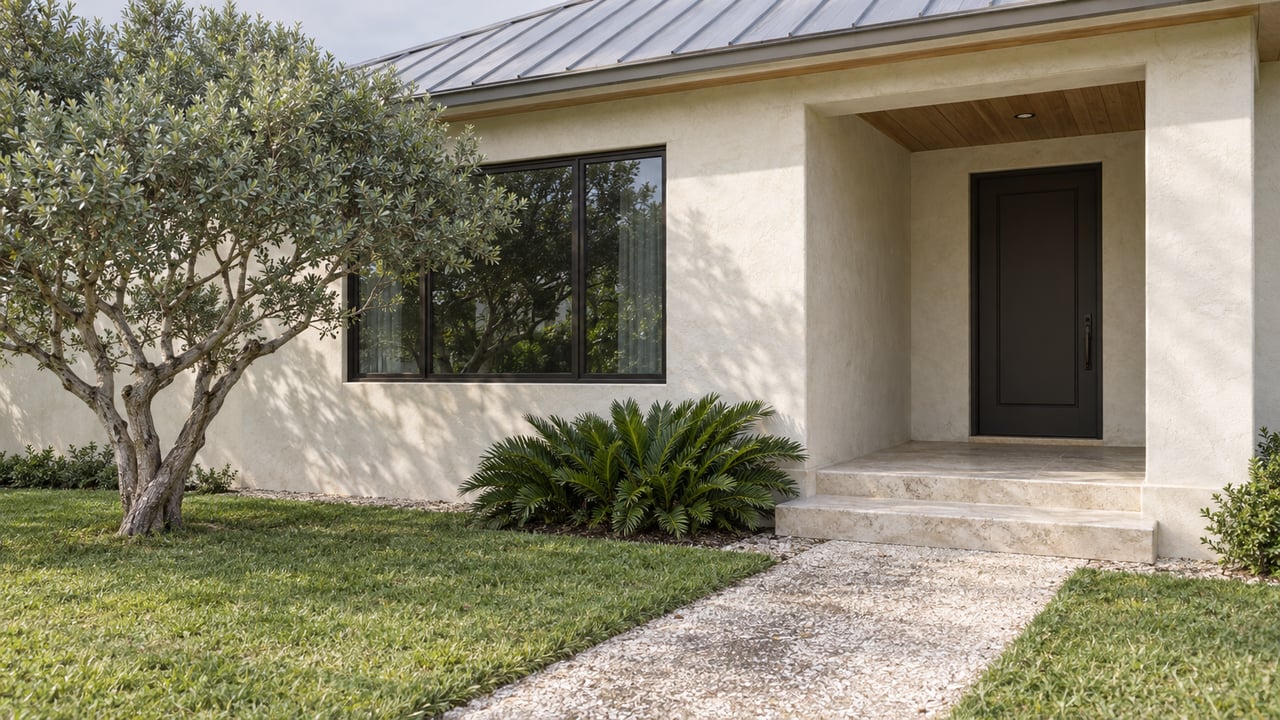
Ballast Point's own housing stock skews mid-century, 1940s to 1960s bungalows and ranch homes on established lots under live-oak canopy, with steady infill of new construction on the streets closest to the water. That mix is what makes the neighborhood function as one of South Tampa's more approachable entry points to the Bayshore corridor, a way to buy into the waterfront lifestyle and the walk or bike access to the 4.5-mile Bayshore Boulevard sidewalk without paying Bayshore Beautiful or Hyde Park prices for the whole property.
The neighborhood's anchor is Ballast Point Park, with its 600-foot pier over Hillsborough Bay, a splash pad, playground, and boat ramp, plus the Taste of Boston restaurant serving New England-style seafood at the water's edge. The Tampa Yacht and Country Club sits at the corridor's northern edge, offering marina access, tennis, and an equestrian facility. Gadsden Park nearby adds trails and a dog park for anyone who wants more room than the pier's footprint. The pier and the park itself both draw daily use from the neighborhood's mid-century housing stock, giving the area a settled, established feel that shows up in market write-ups as lower turnover, with a meaningful share of owners who bought in the 1990s or early 2000s.
The neighborhood's own history explains some of this stability. The name traces to the 1850s, when cattle-trade schooners bound for Cuba released ballast stones along the shoreline before moving upriver into shallower water. The site entered the historical record in October 1863, when Union forces raided the shoreline near today's Gandy and Bayshore intersection. The bayfront acreage that became today's park was purchased in 1894 by Mrs. Chester W. Chapin, who developed it as a park and trolley terminus. The area wasn't annexed into the City of Tampa until 1953, later than much of the rest of South Tampa, which tracks with its more suburban, lower-density feel relative to Hyde Park today.
What This Means If You're Comparing Neighborhoods
A single neighborhood-wide median is close to meaningless in a market this thin and this wide-ranging. Before treating any headline number as a basis for comparison against Hyde Park, Bayshore Beautiful, or anywhere else, it's worth asking three things: what time window does this figure cover, is it built from closed sales or active listings, and how many transactions actually fed into it. A twelve-month median is far more stable than a single-month figure in a neighborhood selling roughly ten to thirty homes a month. A number built from active-listing asking prices tells you what sellers hope for, not what buyers are paying. And a number driven by two dozen sales can be reshaped entirely by a single bayfront closing or a single land-value teardown sale landing in that window.
For anyone actually comparing what a specific budget buys in Ballast Point against Hyde Park or Bayshore Beautiful, the useful question isn't "what's the median" but "what's selling on this specific block, in this specific price band, in the last quarter." That is a narrower, harder question, and it's the one that actually holds up against a spreadsheet full of contradicting portal numbers.
A Few Direct Questions
Does a lower reported median mean Ballast Point prices are falling? Not necessarily. Several of the lower figures cited above come from single-month snapshots in a market with a genuinely small sales count, where one lower-priced closing can swing the average sharply without reflecting a broader trend. The steadier trailing twelve-month figures, which smooth across more transactions, have stayed closer to the mid $600,000s.
Which number should I use if I'm comparing Ballast Point to Bayshore Beautiful or Hyde Park? A trailing twelve-month median of closed sales is the most stable basis for comparison. Active-listing asking prices and single-month medians in Ballast Point specifically should be treated as noisy given how few homes sell there in any given month.
Why does price per square foot vary so much between sources? Because it's measuring different slices of inventory. Estimates built from active listings skew toward whatever is currently on the market, which may cluster near the water. Estimates built from a full year of closings capture the entire range, from inland bungalows to bayfront estates, and land lower as a result.
If you're weighing a specific block in Ballast Point against a comparable one in Hyde Park or Bayshore Beautiful, the neighborhood-wide median won't settle it. The Fate Team can pull the actual comparable sales for your street and price band, not the blended number a portal is reporting this month, and turn that into a straight answer about what your budget buys and where.