Fort De Soto's pay stations already work by license plate. They take only Visa, Mastercard and American Express, and you don't leave a receipt on the dashboard. Starting Tuesday, Dec. 1, they charge by the hour. Beach parking goes from a flat $6 per vehicle to $3.50 an hour, capped at $12 a day. Boat ramp parking goes from $6 a day to $12 a day.
The headlines call it a fee hike, and for a full beach day it is one. For everyone else, the new rates reward short visits, double the cost of long ones, and make an annual pass cheaper to justify than it was under the old prices. The construction calendar this winter leans heavily on the long-day visitors. Those include boaters, cyclists using the park road and trail, and anyone booking the Egmont Key ferry.
What a Visit Costs Starting December 1
Pinellas County's rates are simple: $3.50 for each hour until you hit the $12 daily cap. Here is how that compares with the $6 flat fee for a vehicle without a trailer that applies through November.
Length of stay | Through Nov. 30 | Starting Dec. 1 | Change |
|---|---|---|---|
1 hour | $6.00 | $3.50 | $2.50 less |
2 hours | $6.00 | $7.00 | $1.00 more |
3 hours | $6.00 | $10.50 | $4.50 more |
4 hours or longer | $6.00 | $12.00 | double |
The break-even point comes just short of two hours. Anything shorter costs less than it did all fall. Once you pass about three and a half hours, the $12 cap takes over and the day costs twice the old rate.
The same rates apply at Sand Key and Fred Howard, the county's other two beach parks. FOX 13 reported that county leaders approved the increases at all three as part of the newly adopted county budget. Fees are still waived for vehicles that properly display a valid disabled parking permit or tag, and they don't need to be in a designated accessible space.
Why the County Restructured It
County officials told FOX 13 that the rates hadn't changed in about 20 years. They expect the new fees to bring in nearly $3 million a year. Alongside other budget cuts, the money is meant to cover rising costs, tens of millions of dollars in unfunded state and federal mandates, and possible budget shortfalls next year.
That revenue target explains the design. Charging by the hour means a quick stop pays less, while the cars that hold a space from morning to sunset cover most of the gap. The paving work underway now gets its money elsewhere. The county's repair page says the road and trail repaving is funded by Penny for Pinellas. Eligible hurricane repair costs are paid 75% by the federal government, 12.5% by the state and 12.5% by the county, on a reimbursement basis.
The Annual Pass Gets Easier to Justify
The annual pass increases took effect earlier, on Oct. 1, 2026. Prices are listed before tax. Measured against the $12 daily cap instead of the old $6 rate, each pass pays for itself in fewer full days than before.
Pass | Old price | New price | Full days to cover it at the old $6 | Full days to cover it at the new $12 |
|---|---|---|---|---|
Annual Beach Pass | $75 | $95 | about 13 | about 8 |
Annual Boat Pass | $110 | $140 | about 19 | about 12 |
Senior Pass, beach and boat | $55 | $70 | about 10 | about 6 |
6-Month Beach Pass | $45 | $60 | 8 | 5 |
The math is just the pass price divided by the daily rate, before tax. Under the new rates, an annual beach pass covers itself after about eight capped beach days. Under the old rates, it took about 13 full days. For someone who goes for an hour at sunset, the math doesn't change much, because each of those visits will cost $3.50 starting Dec. 1.
The county also added a military discount annual boat pass at $105. The military beach pass rose from $55 to $70, and the limited income beach pass from $37 to $55. The senior beach pass is no longer sold on its own, so seniors who only used the beach now buy the combined $70 senior pass. Passes for disabled U.S. veterans are still free. Pass holders' license plates are uploaded to the system daily.
Boaters Pay Double While Half the Ramps Are Closed
Boat ramp parking doubles to $12 a day on Dec. 1. That comes in the middle of the most disruptive stretch of the ramp rebuild on Madelaine Key. Helene's storm surge damaged the gangways, floating docks, railings and concrete abutments there. The county is installing new floating docks and gangways in the existing footprints.
The dock work runs in two phases:
- Phase one closes the five ramps on the south end.
- Phase two closes the six docks on the north end and opens the five new docks to the public.
- Each phase is expected to last about a month, weather permitting.
- The full reopening is expected in January 2027.
Before work started, the county said every floating dock at the park was out of service except one, and the ramps next to them stayed open. Anglers who walk out instead of launching also have less room. The far end of the Bay Pier is closed for hurricane repairs, and the county plans to resume that work after the ramp construction is done. The Bay Pier project covers the concrete dock and landings, replacement gangways, railings and service lines. Construction is scheduled for fall 2026 through spring 2027.
The county's Fort De Soto repair page shows which phase is active. Check it before you hitch up the trailer. A 12-month boat pass now costs about as much as 12 capped launch days.
Long Days on a Road Being Repaved
Pinellas Bayway South and Anderson Boulevard, the park's main road, are both under construction this winter. The county is repaving about 7 miles of roadway, from the south approach of the Bayway Bridge to the east end of Anderson Boulevard. It is also repaving about 6.6 miles of trail alongside. Both projects are scheduled from mid-September 2026 through February 2027, weather permitting. The trail project also adds a new link to Anderson Boulevard near East Beach at the trail's northeastern end. The county asks drivers and trail users to use caution.
The Egmont Key trip almost always means paying the daily cap. Hubbard's Marina runs the ferry. Its schedule lists 9 a.m. and 11 a.m. departures daily, plus 2 p.m. trips on Tuesday, Thursday, Saturday and Sunday. The marina notes that fall and winter service runs nearly every day and asks riders to check availability. Its page names both the boat ramp and the Bay Pier as the departure point, so confirm which one when you book.
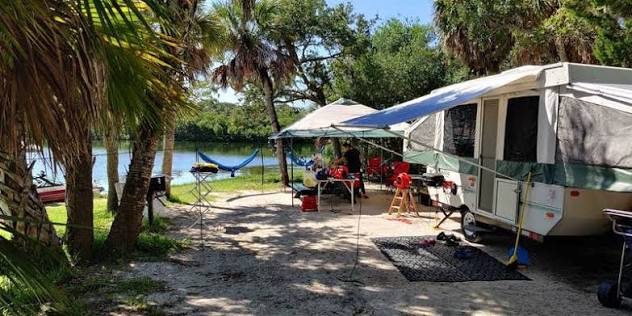
The 236-site campground takes reservations, and the campground office is open daily from 9 a.m. to 6 p.m. There's more work planned behind those sites. A replacement aluminum seawall, placed in front of the failed one, is scheduled for construction from early 2027 through summer 2027.
The Short Visits That Will Cost Less
Starting Dec. 1, the cheapest Fort De Soto visit is a short one, and most of the park's short-visit spots are working. The Gulf Pier, which has a food and bait concession, is open from 7 a.m. to sunset. Its seawall and sidewalk don't go under construction until spring 2027. The park also has a designated dog beach and two fenced dog areas with water stations. Whether it's an hour on the Gulf Pier at sunset or a dog run before work, each visit will cost $3.50 instead of $6 from December on.
The Quartermaster Museum, the raised frame building damaged by Helene's surge and wind, has its ramp and roof repairs finished. The park has a 2.25-mile canoe trail, and Fort De Soto Hospitality runs its Kayak Outpost next to the dog park. The operator lists the outpost's hours as 9 a.m. to 4 p.m., weather permitting, and says kayak rentals will be available in early spring.
Some repairs will last longer than this season. The North Beach restrooms are scheduled for construction from summer 2027 through summer 2028. Rebuilding of the East Beach traffic loop on Mullet Key starts in summer 2027.
One date matters for early risers. On Saturday, Nov. 14, the Last Chance Tri keeps the park closed until 9 a.m. The organizer lists the event window as 7 a.m. to 10:30 a.m. That morning still falls under the $6 flat rate.
The Fort De Soto changes are a small version of something we watch across Tampa Bay. A shift in what everyday visits cost or how they work tends to show up later in how people value the homes nearby. At The Fate Team, we track these local changes so our clients' pricing reflects how the area is used today. If you're curious what your home near the Gulf beaches is worth this winter, Request Your Home Valuation and we'll walk you through the numbers.